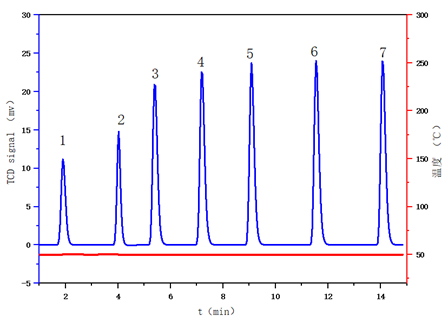

Metal dispersion refers to the ratio of active metal atoms on the catalyst surface to the total metal atoms, directly reflecting the utilization rate of metal atoms on the catalyst surface. Higher dispersion means more active sites are exposed, thereby improving the selectivity and efficiency of the catalytic reaction. For instance, high dispersion of platinum atoms in a platinum-based catalyst (such as Pt/Al₂O₃) can significantly enhance its activity in hydrogen reduction reactions.
In catalytic science, optimizing catalyst performance is crucial for improving reaction efficiency and reducing costs. The dispersion of metals on the catalyst surface, along with active surface area and average crystallite size, are key parameters determining catalyst performance.
Hydrogen-oxygen titration a technique within dynamic chemical adsorption, analyzes the dispersion of metal atoms on the catalyst surface through a chemical adsorption process. The principle is based on the reaction between hydrogen and oxygen atoms adsorbed on the catalyst surface to form water vapor, indirectly determining the number of metal atoms on the catalyst surface.
1. Sample Pretreatment: The sample is purged with inert gas at ambient temperature to remove residual gases and ensure a clean experimental environment.
2. Programmed Temperature Reduction: Hydrogen reduction via programmed temperature increase converts metal oxides in the catalyst to the metallic state.
3. Oxygen Saturation Adsorption: At a certain temperature, the catalyst adsorbs oxygen to ensure full combination of metal and oxygen atoms.
4. Pulse Hydrogen Titration: By pulsing hydrogen titration, the amount of oxygen adsorbed on the catalyst surface is measured to calculate metal dispersion.
Through the hydrogen consumption measured in the experiment, the PCA-1200 can quickly determine the dispersion of platinum and further analyze the specific surface area and average crystallite size. For example, for a Pt/Al₂O₃ catalyst with a platinum mass fraction of 5%, the PCA-1200 can quickly provide accurate results to help optimize the catalyst preparation process.
1. High-Precision Measurement: Uses high-sensitivity detectors and chromatography to accurately measure hydrogen and oxygen consumption, ensuring high data precision and repeatability.
2. Automated Analysis: Features intelligent software for automated sample handling, data collection, and analysis, from pretreatment to result output.
3. Multi-Functional Analysis Module: Measures metal dispersion and analyzes specific surface area and average crystallite size for comprehensive catalyst characterization.
4. Flexible Experimental Design: Supports various modes like programmed temperature reduction (TPR), programmed temperature oxidation (TPO), and pulse titration for diverse catalyst analysis.
5. User-Friendly Interface: Intuitive software interface with one-click operation and automated data processing for easy use.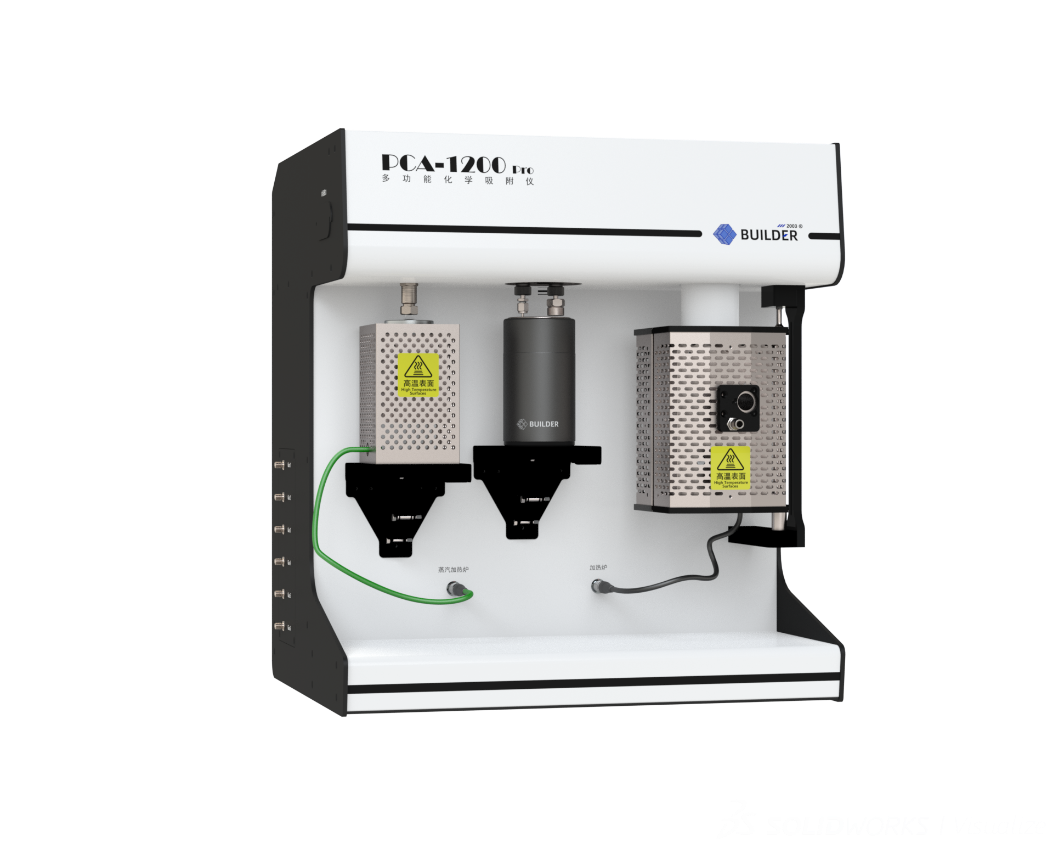
contact
Be the first to know about our new product launches, latest blog posts and more.Any question or request?
Click below, we’ll be happy to assist. contact