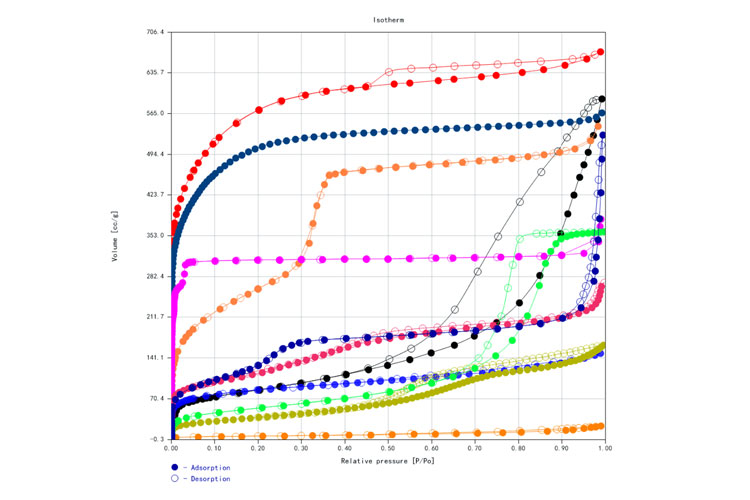

BET specific surface area testing often results in prolonged nitrogen desorption, significant differences between test results and theoretical and empirical values, and unclosed adsorption desorption isotherms. All of these issues are related to the sample size, so in order to conduct experiments quickly and accurately, the choice of sample size plays a decisive role. Before testing, the specific surface area range of the sample should be estimated in order to determine the sample quality range. Generally, the sample size follows the following principle: sample size x specific surface area ≥ 5^-10.
Specifically, what is the relationship between determining the sample size and the experiment?
To meet the detection accuracy of pressure sensors, nitrogen needs to meet the requirements of 20-40 square meters for specific surface area and pore size analyzer adsorption. The Biode surface area and pore size analyzer uses high-precision imported pressure sensors, combined with the unique "pressure equilibrium point B-ST detection technology", to keep the adsorption desorption isotherm smooth and reduce the relative error of the test results.
To ensure the accuracy of sample weighing, the length of the sample tube should be greater than one ten thousandth of the balance height, and the balance cover should be kept open during weighing. To ensure weighing accuracy and avoid interference from static electricity and air, it is recommended to have a sample size greater than 50mg. If it is large surface area activated carbon, MOFs/COF, etc., the sample size should be at least 10mg.
Save experimental time, excessive sample size can lead to an increase in total surface area and unnecessary testing time.
contact
Be the first to know about our new product launches, latest blog posts and more.Any question or request?
Click below, we’ll be happy to assist. contact